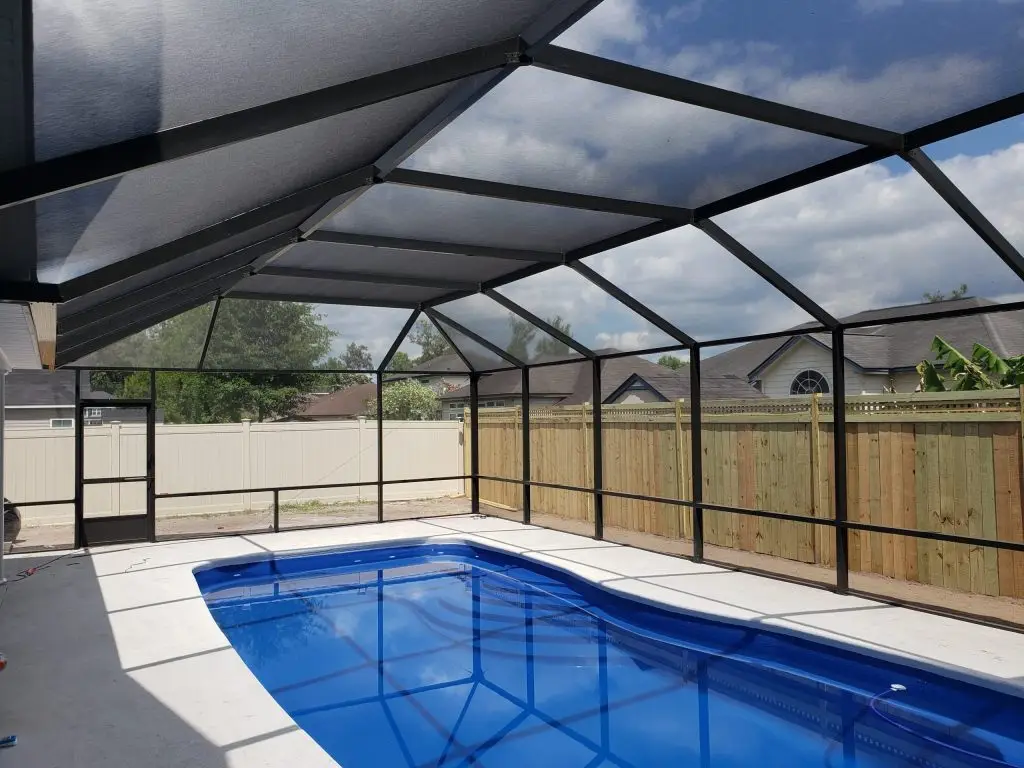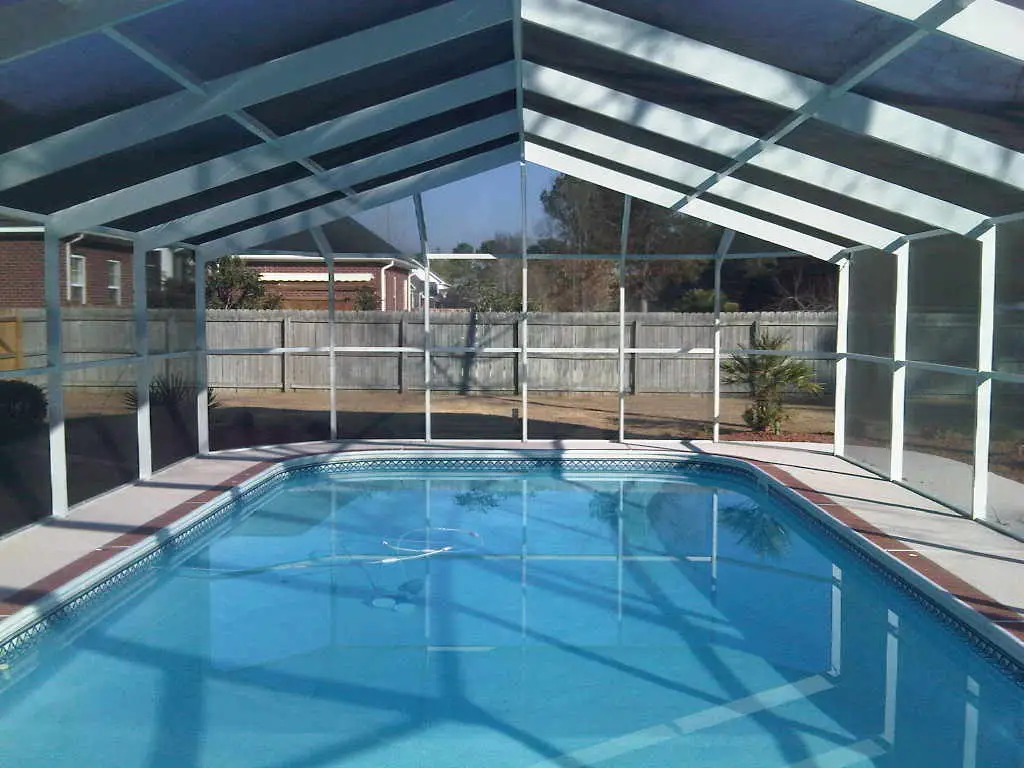
Ask any Spartanburg homeowner who maintains a pool without an enclosure what the most frustrating part of pool ownership is, and the answer is almost never the swimming. It’s the cleaning. The constant skimming, the chemical adjustments after a storm, the pollen that coats the water surface every spring, and the debris that finds its way into the filter after every windy afternoon.
A pool enclosure doesn’t just change how your pool looks. It changes how much time and money you spend keeping it usable. For Spartanburg pool owners specifically, the maintenance burden is higher than in many other parts of the country because of the region’s combination of heavy pollen seasons, active storm weather, and long periods of intense UV exposure. This article breaks down exactly where those savings come from and how they add up over time.
Thinking about a pool enclosure and want to know if the numbers make sense for your property? Reach out for a site assessment and an honest conversation about costs and savings.
Why Spartanburg Pools Are Especially High-Maintenance Without Enclosures
Before getting into the savings, it helps to understand why open pools in Upstate South Carolina require more maintenance than homeowners in other regions typically expect.
Spartanburg sits in a climate zone that delivers several distinct maintenance challenges across a single year:
- Spring pollen season runs from late February through May and is among the heaviest in the Southeast. Pine, oak, and grass pollens coat pool surfaces, clog filters, and alter water chemistry in ways that require frequent chemical correction.
- Summer storm activity brings leaves, twigs, insects, and debris into the pool on a regular basis from May through September. Heavy rain also dilutes pool chemistry and can introduce contaminants that require shock treatment to correct.
- UV exposure is intense from spring through fall, which accelerates the breakdown of chlorine and other sanitizers, requiring more frequent chemical additions to maintain safe water.
- Fall leaf drop creates a sustained debris problem from October through December that taxes filters and demands regular skimming to prevent organic matter from decomposing in the water.
Each of these factors adds time, chemical cost, and equipment wear to annual pool maintenance. An enclosure addresses all of them simultaneously.
Where the Maintenance Savings Actually Come From
Reduced Chemical Costs
This is typically the largest recurring savings for Spartanburg pool owners who enclose their pools. Chemicals represent a significant portion of annual pool maintenance costs, and most of that chemical consumption is driven by external contamination and UV degradation rather than normal pool use.
Here’s how an enclosure reduces chemical demand:
- Pollen and organic debris introduce phosphates and other compounds into pool water that feed algae growth and consume sanitizer. Less debris entering the pool means less chemical correction needed to maintain balance.
- Rainfall dilutes chemical concentrations and can introduce nitrogen compounds that destabilize water chemistry. An enclosed pool is protected from direct rainfall, reducing the frequency of post-rain shock treatments.
- UV exposure breaks down free chlorine rapidly in unprotected pools. An enclosure, particularly one with a partial or full solid roof section, reduces direct UV exposure and slows chlorine degradation, extending the effective life of each chemical addition.
Homeowners who track their chemical spending before and after enclosure installation consistently report meaningful reductions in annual chemical costs. The exact savings vary based on pool size, usage, and enclosure type, but the direction of the change is consistent.
Less Time and Labor Spent Cleaning
Time has real value. For pool owners who clean their own pools, an enclosure reduces the hours spent skimming, vacuuming, and backwashing the filter. For those who pay for a pool service, it can directly reduce the frequency and scope of service visits.
An enclosed pool in Spartanburg accumulates less debris than an open pool. During peak spring pollen weeks, an unenclosed pool may need skimming daily. An enclosed pool during the same period may need attention once a week or less. That difference across a full season adds up to a significant reduction in either personal time or service costs.
Extended Equipment Life
Pool equipment, including pumps, filters, and heaters, works harder when the water is frequently contaminated with debris and chemically unbalanced. Running a filter continuously to manage heavy organic loads accelerates wear on the motor and filter media. Frequent chemical swings, particularly pH fluctuations from heavy rainfall or pollen loading, can damage pool surfaces, gaskets, and metal components over time.
An enclosure reduces the contamination load on your equipment, which means filters run more efficiently, pumps cycle less aggressively, and the overall mechanical stress on the system decreases. Equipment that lasts longer and runs more efficiently directly reduces annual operating and replacement costs.
Lower Heating Costs
For Spartanburg pool owners who heat their pools to extend the swimming season into cooler months, an enclosure provides real energy savings. An enclosed pool loses heat more slowly than an open one because the enclosure reduces wind exposure across the water surface, which is the primary driver of evaporative heat loss.
Even a screen-only enclosure with no solid roof provides a measurable reduction in wind-driven heat loss compared to a fully open pool. A partial or full solid roof enclosure amplifies this effect significantly. For homeowners running a gas or electric heater through October and November, those heating cost reductions can be meaningful across a season.
Reduced Evaporation and Water Loss
Evaporation is a surprisingly significant contributor to pool operating costs in Spartanburg’s warm, often breezy climate. An open pool loses a substantial volume of water to evaporation across the warm season, and that water has to be replaced. More importantly, evaporation concentrates dissolved minerals and chemicals in the remaining water, which can accelerate scaling on pool surfaces and equipment and requires additional chemical correction to manage.
An enclosure, especially one that reduces wind exposure across the water surface, meaningfully slows evaporation. Less water replacement, more stable chemical concentrations, and reduced scaling are all downstream benefits.
How the Savings Stack Up Over Time
The savings from reduced chemical costs, less frequent cleaning, extended equipment life, lower heating costs, and reduced water loss compound across years of pool ownership. While the specific numbers vary based on pool size, usage, and enclosure type, the cumulative effect over five to ten years is substantial for most Spartanburg homeowners.
A pool enclosure installation carries an upfront cost that varies based on pool size, enclosure height, and structure type. But when that cost is evaluated against the ongoing annual savings in chemicals, cleaning, equipment maintenance, heating, and water replacement, the return timeline is often shorter than homeowners expect.
The additional quality-of-life benefits, including a cleaner pool that’s ready to use without preparation, a pollen-free swimming environment during spring, and an extended swimming season, add value that doesn’t show up in a maintenance cost calculation but is consistently cited by enclosure owners as the most appreciated outcome.
What Type of Enclosure Delivers the Most Savings?
Not all enclosures deliver identical maintenance savings. The level of protection varies by enclosure type, and that affects how much chemical and cleaning cost reduction you actually see.
| Enclosure Type | Debris Protection | Chemical Savings | Heating Savings |
| Screen-only enclosure | Excellent | High | Moderate |
| Partial solid roof with screen sides | Excellent | High | Good |
| Full solid roof enclosure | Maximum | Maximum | Best |
A screen-only enclosure delivers the largest improvement over an open pool for debris and pollen management, which drives the biggest reduction in chemical and cleaning costs. A solid roof section adds meaningful heating and UV protection benefits on top of that baseline. The right choice depends on your priorities and budget, and a site visit from a local contractor will help clarify which option makes the most sense for your specific pool and property.
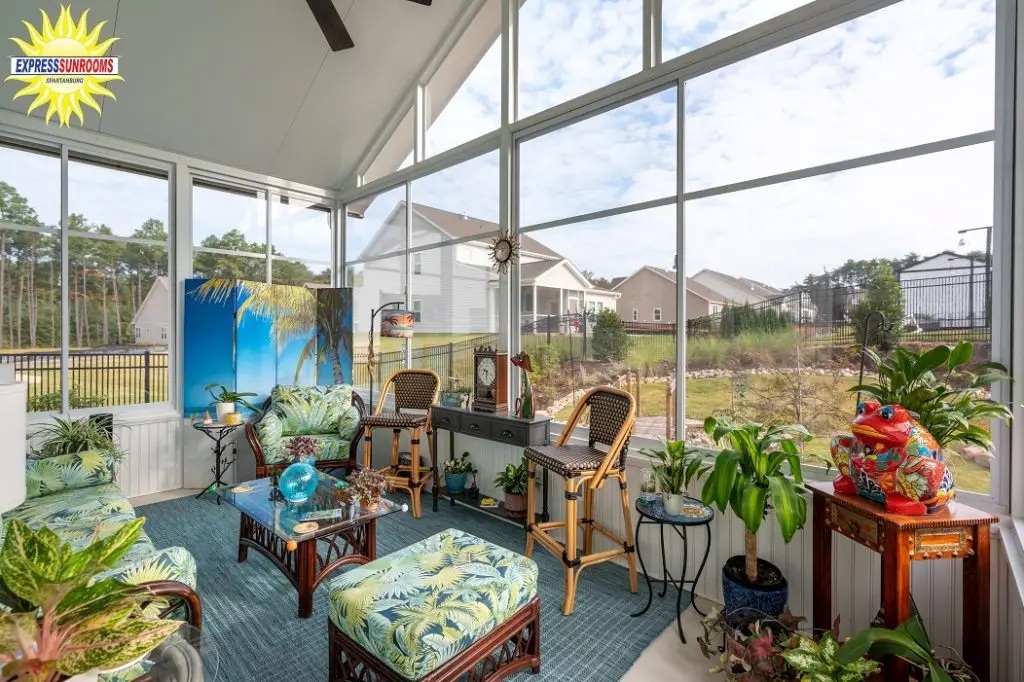
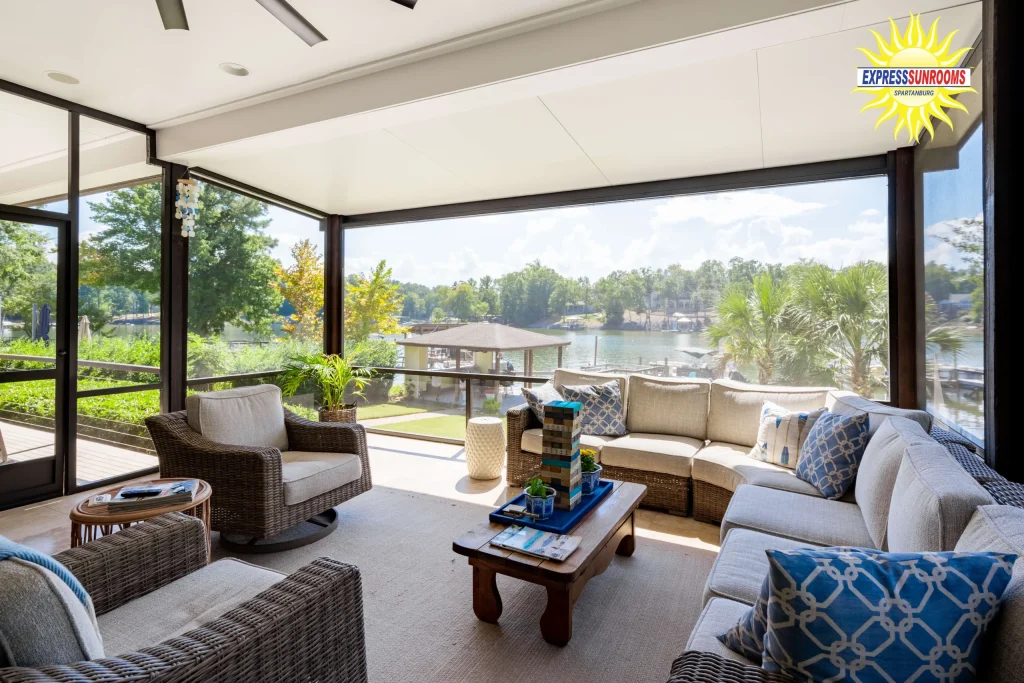
If you’re also considering enclosing other outdoor living areas, it’s worth knowing that screen enclosures for porches and covered spaces follow similar principles, protecting the space from the same Spartanburg-specific debris and pollen challenges that make open outdoor living difficult for much of the year.
Frequently Asked Questions
How much can I realistically save on pool chemicals with an enclosure in Spartanburg?
The savings vary based on pool size, current chemical costs, and enclosure type. Homeowners who track their spending typically report noticeable reductions in annual chemical costs, driven primarily by less debris contamination and reduced UV-driven chlorine breakdown. A screen enclosure delivers the most significant chemical savings compared to an open pool.
Does a pool enclosure help with Spartanburg’s spring pollen season?
Yes, significantly. A properly sealed screen enclosure keeps airborne pollen from settling into the pool water and onto the deck during peak spring pollen weeks. This reduces both the direct cleaning burden and the chemical correction needed to manage pollen-related water chemistry disruption.
Will an enclosure extend my swimming season in Spartanburg?
Yes. An enclosure reduces wind-driven heat loss, which is the primary driver of heat loss in outdoor pools. Combined with a pool heater, an enclosure allows comfortable swimming well into fall and can enable earlier season opening in spring. A solid roof section amplifies this benefit further.
How does an enclosure affect pool filter maintenance?
A pool with less debris entering the water runs its filter more efficiently and requires less frequent backwashing and filter media replacement. This reduces both the time spent on filter maintenance and the cost of replacement cartridges or media over time.
Does enclosing a pool affect its resale value?
A well-built pool enclosure adds meaningful appeal in the Spartanburg market. Buyers who are considering homes with pools often view an enclosure as a significant positive, both for the reduced maintenance burden it represents and for the extended usability it provides across Spartanburg’s climate.
Ready to See What an Enclosure Could Save You?
Talk to a Local Specialist About Your Pool
Every pool and property is different, and so are the maintenance savings. The best way to understand what an enclosure would realistically save you in Spartanburg is to talk through your specific situation with someone who knows the local climate and builds these structures regularly. Express Sunrooms of Spartanburg has helped Upstate homeowners make this decision and can give you a clear, honest picture of what an enclosure would mean for your pool’s annual operating costs. Reach out to schedule a site visit.