Motorized retractable screens have become one of the most requested outdoor living upgrades in Spartanburg over the past few years, and it’s easy to see why. They solve a specific problem that plagues open porches and covered patios across Upstate South Carolina: the outdoor space looks great, but it’s unusable for half the year because of bugs, glare, afternoon heat, and the kind of pollen season that coats every surface in yellow from February through May.
A motorized screen drops down at the touch of a button and creates a protected, comfortable environment from your existing covered structure. When you want it gone, it disappears into a housing at the top of the opening and looks like it was never there. No permanent enclosure, no construction mess, no waiting months for a project to complete.
This guide covers everything Spartanburg homeowners should understand before buying a motorized retractable screen system, from how the technology works and what it actually costs, to which spaces benefit most and what to ask your installer before signing anything.
Ready to stop losing your porch to bugs and heat every summer? Speak with a local outdoor living specialist about motorized screen options for your specific space.
What Motorized Retractable Screens Actually Are
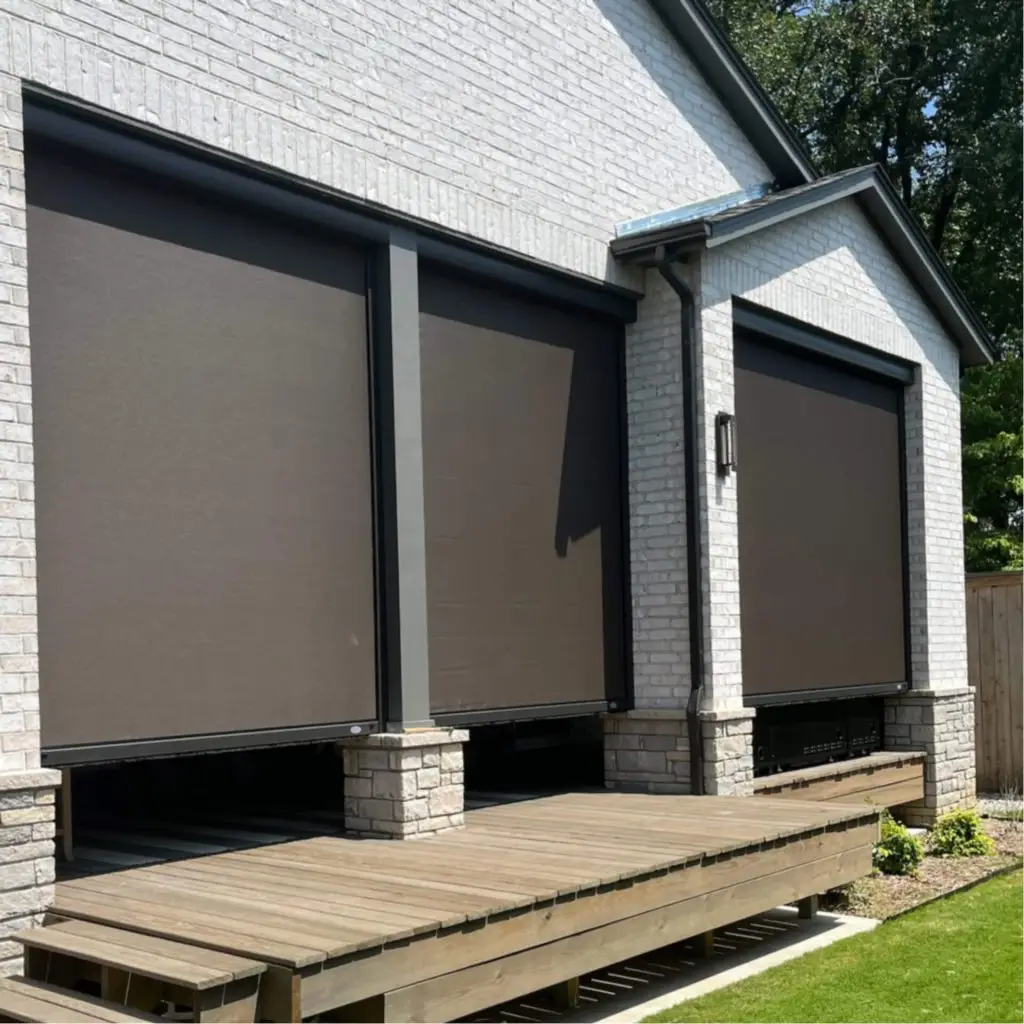
A motorized retractable screen is a screen panel housed in a compact enclosure, typically mounted at the top of an opening, that rolls down vertically using an electric motor. When deployed, it creates a full-height screen wall across the opening. When retracted, it rolls back into its housing and is virtually invisible.
The motor is controlled by a wall switch, a remote, or in many systems, a smartphone app. Some systems integrate with smart home platforms and can be scheduled to deploy automatically at dusk when mosquitoes become active, or retract when the wind picks up.
They install under existing rooflines, covered patios, pergolas, and porch overhangs. Because they don’t require a new roof structure, they’re a fundamentally different category from screened porches and screen enclosures. The roof is already there. The motorized screen system simply fills the open sides of that existing covered space on demand.
How Motorized Screens Differ from Other Enclosure Options
Spartanburg homeowners evaluating outdoor living improvements often compare motorized screens against several other options. Understanding where they sit in that landscape helps clarify whether they’re the right fit.
| Option | Requires Existing Roof | Permanent | Bug Protection | Weather Protection | Typical Starting Cost |
| Motorized retractable screens | Yes | No | Excellent | Good | Mid-range |
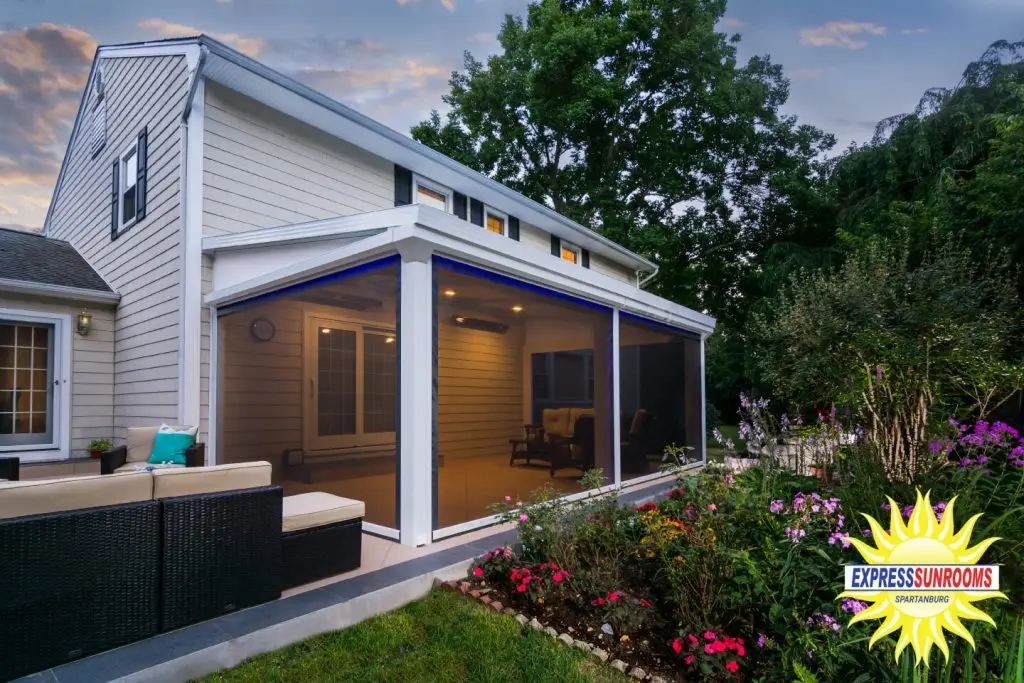
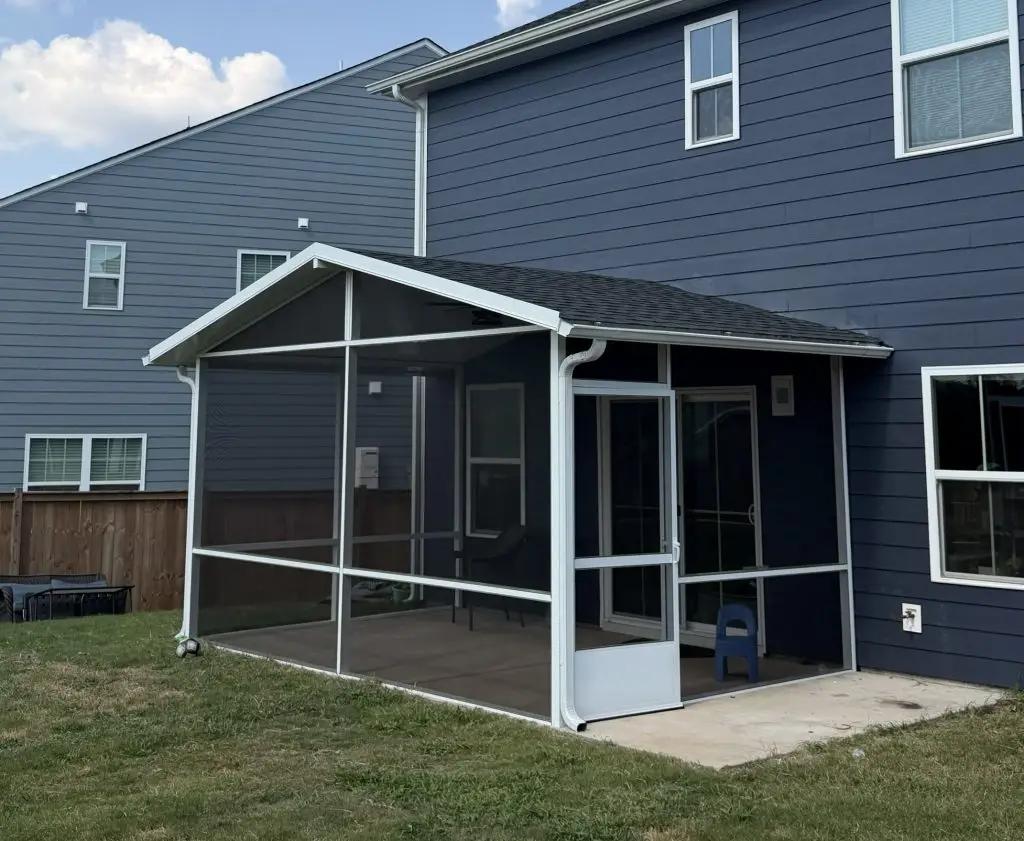
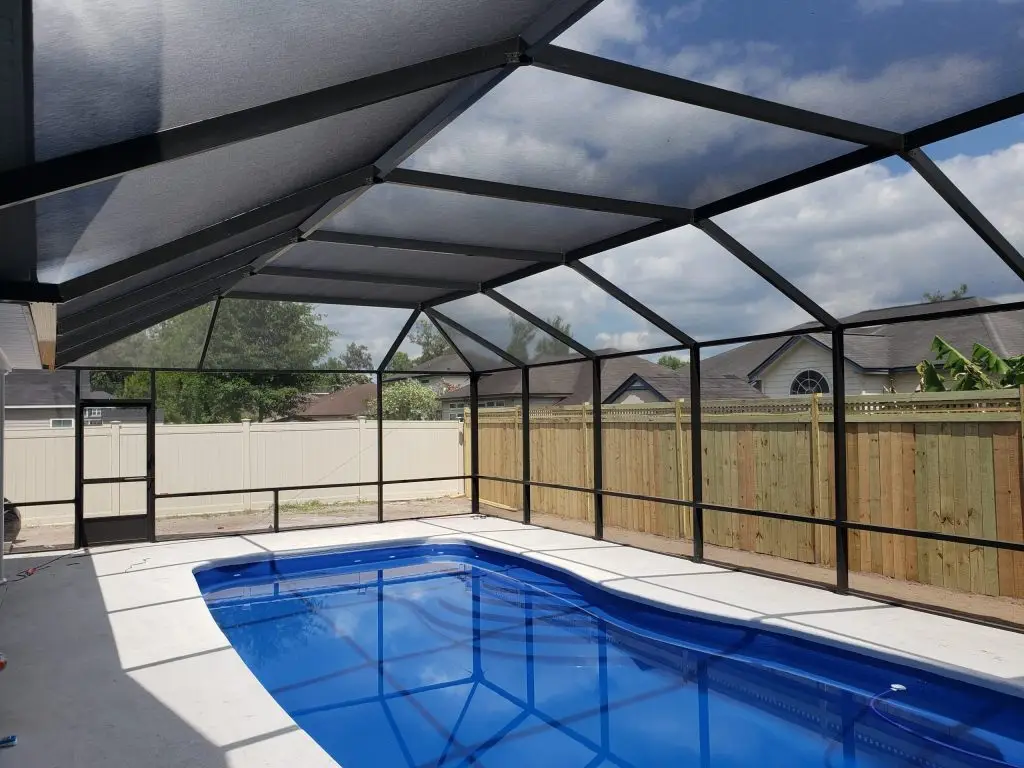
| Screen enclosure | Yes | Yes | Excellent | Good | Lower range |
| Screened porch (new structure) | No | Yes | Excellent | Good | Mid-range |
| Vinyl porch panels | Yes | No | Excellent | Very good | Mid-range |
| Open patio cover | No | Yes | None | Partial | Varies |
The defining characteristic of motorized screens is their reversibility. A screen enclosure or screened porch is a permanent modification to your home. A motorized screen system can be removed without leaving any trace on the structure. For homeowners who aren’t ready for a permanent enclosure, or who want the flexibility to have a fully open space when conditions are right, motorized screens hit a different spot on the spectrum.
What Problems Motorized Screens Solve in Spartanburg
Upstate South Carolina’s climate creates a specific combination of outdoor living problems that make this product particularly well-suited to this market.
Bugs and Insects
Mosquito season in Spartanburg runs from roughly April through October, with peak activity from June through August during the evening hours when most homeowners actually want to use their porch. Gnats, no-see-ums, and flies are active through the same window. A deployed motorized screen creates a physical barrier that eliminates insects from the enclosed space entirely, which is a fundamentally different outcome from repellents or citronella candles that reduce but don’t remove the problem.
Pollen Season
Spartanburg’s spring pollen season is among the most severe in the Southeast. Pine, oak, and grass pollens run in overlapping waves from late February through May. A deployed screen keeps airborne pollen out of your porch space during peak hours, which matters both for allergy sufferers and for anyone who is tired of wiping down furniture every day.
Afternoon Heat and Glare
A motorized solar screen, as opposed to a standard insect screen, uses a denser mesh weave that reduces solar heat gain and cuts glare significantly. In a south or west-facing porch in Spartanburg, afternoon sun from May through September can make an open covered patio unbearably hot even in the shade. A solar screen mesh reduces that heat load meaningfully while still allowing airflow and outward visibility.
Wind and Light Rain
A properly tensioned motorized screen provides meaningful protection from light wind and rain. It won’t keep out a direct Spartanburg thunderstorm, but it handles the kind of light afternoon sprinkle that would otherwise send everyone inside. For homeowners who want to stay on the porch through marginal weather, the added protection is genuinely useful.
Types of Motorized Retractable Screens
Not all motorized screen systems are the same, and the differences matter for how the product performs in Spartanburg’s climate.
Insect Screen Mesh
Standard insect screen mesh is optimized for maximum airflow and bug exclusion. It’s the right choice for covered spaces where heat is not the primary concern and the goal is simply to keep insects out while maintaining an open, airy feel. This mesh type provides the least resistance to airflow and the most transparent view to the outside.
Solar Screen Mesh
Solar screen mesh uses a tighter weave that blocks a percentage of solar radiation before it enters the space. The mesh is available in different openness factors, typically ranging from 3% to 14%, where a lower number means more solar blockage and less view-through clarity. For a south or west-facing porch in Spartanburg, a solar screen with a 3% to 5% openness factor delivers meaningful heat reduction without making the space feel cave-like.
Privacy Screen Mesh
Privacy screen mesh is a denser weave that limits visibility into the space from outside while maintaining reasonable outward visibility during the day. It’s useful for porches on smaller lots or in neighborhoods where proximity to neighbors makes privacy a priority.
Clear Vinyl Panels
Some motorized screen systems offer clear vinyl panel options rather than mesh. These provide full weather protection, including against driving rain and cold, while maintaining visibility. They’re closer to the vinyl porch panel category in terms of protection level but with the convenience of motorized deployment.
Where Motorized Screens Work Best in Spartanburg Homes
Motorized retractable screens aren’t suited to every space. They require an existing overhead structure to mount to, and they work best in specific configurations.
Back porch under an existing roof: This is the most common installation scenario in Spartanburg. A covered back porch with open sides is exactly the space motorized screens are built for. The housing mounts to the existing ceiling or header, and the screen drops down to fill the opening on each exposed side.
Covered patios and patio covers: A patio cover with open sides can be fitted with motorized screens on one, two, or three sides depending on orientation and preference. This converts a basic shade structure into a protected outdoor room without any additional construction.
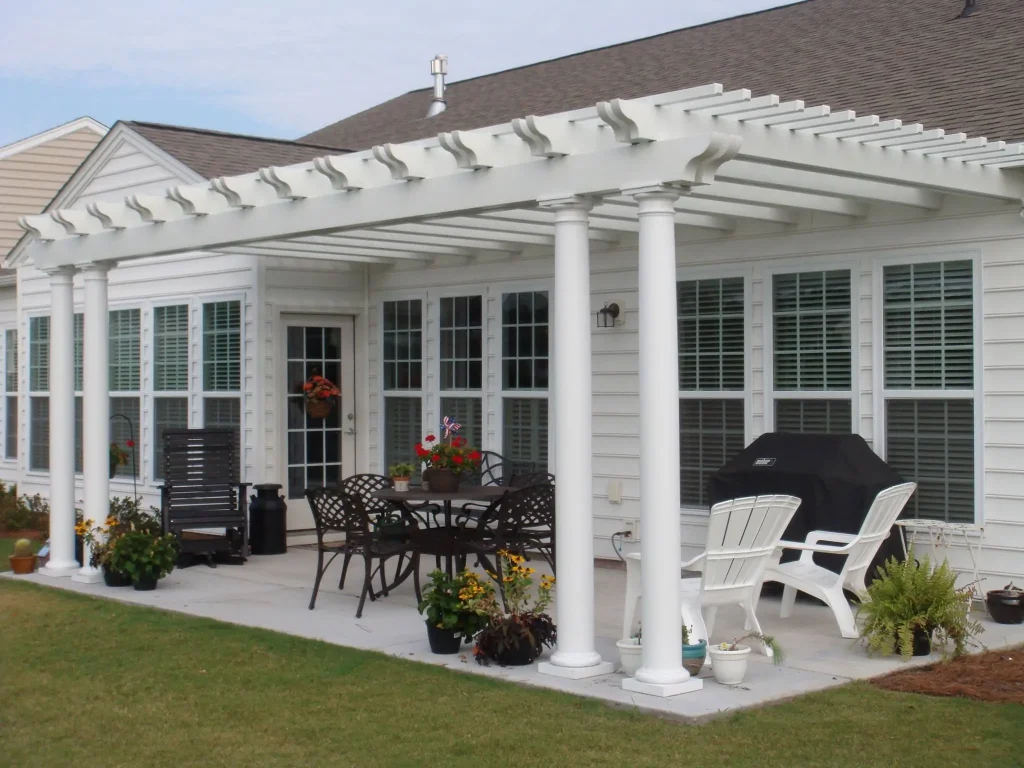
Pergolas with existing rooflines: A pergola with a solid or louvered roof can accommodate motorized screens on its open sides. For homeowners who have already invested in a pergola and want to extend its seasonal use, this is a natural upgrade path.
Outdoor kitchen and dining areas: Covered outdoor kitchen spaces benefit significantly from motorized screens during cooking season, both for keeping insects away from food preparation areas and for reducing the smoke drift that can make outdoor cooking unpleasant on still evenings.
Three-season rooms with existing framing: A three-season room that currently uses fixed screen panels can be upgraded to motorized screens for the convenience of retraction during the cooler months when insect protection is less of a priority.
What Motorized Screens Cannot Do?
Being honest about limitations is important when evaluating any home improvement product.
Motorized screens do not provide the same level of weather protection as a permanent enclosed structure. In a direct Spartanburg thunderstorm with wind-driven rain, a deployed screen will allow some water intrusion, particularly at the sides of the panel where the screen meets the track. Homeowners who want a space that stays fully dry in all weather conditions should consider screen enclosures or vinyl porch panels instead.
They also don’t insulate. A motorized screen on a cold January evening in Spartanburg will keep insects out but won’t keep heat in. For year-round climate-controlled use, a fully insulated sunroom is the appropriate solution.
And because they require an existing overhead structure to mount to, they can’t be installed over an open patio without a roof. The screen housing needs something solid to attach to.
What to Look for in a Motorized Screen System
Quality varies significantly across motorized screen products, and the differences matter for how the system holds up in Spartanburg’s outdoor conditions.
Housing and track construction: The housing that contains the rolled screen and the side tracks that guide the screen as it deploys are the mechanical heart of the system. Aluminum construction with a quality powder-coat finish handles Spartanburg’s humidity and UV exposure far better than plastic components. Side tracks should hold the screen under tension to prevent billowing in wind.
Motor quality and noise level: A quality motor deploys and retracts smoothly, quietly, and consistently. Cheaper motors tend to be noisier, slower, and more prone to failure over time. Ask your installer about the motor brand and warranty coverage specifically.
Screen tension system: A properly tensioned motorized screen stays flat and taut when deployed rather than billowing inward in a breeze. Systems that use a bottom bar weighted and guided by side tracks maintain tension much better than those that rely on the screen material alone.
Control options: Wall switches, remotes, and app control are all available depending on the system. If you’re considering smart home integration or want the ability to schedule deployment automatically, confirm those capabilities with your installer before purchase.
Warranty coverage: Ask specifically about both the motor warranty and the screen material warranty. Motor warranties of five years or more from reputable manufacturers are a reasonable benchmark. Screen material warranties should cover UV degradation and weave integrity for a meaningful period given Spartanburg’s high UV exposure.
The Installation Process
One of the genuine advantages of motorized retractable screens over permanent enclosures is the installation timeline. Most residential motorized screen installations are completed in one to two days depending on the number of openings and complexity of the mounting situation.
The process generally involves:
- Site measurement and confirmation of mounting points
- Custom fabrication of the screen housing and panels to the exact opening dimensions
- Mounting the housing to the existing structure header or ceiling
- Installing the side tracks and bottom bar
- Running low-voltage wiring for the motor to a wall switch or junction box
- Testing operation, tension, and control systems
Because there’s no new roof structure, no foundation work, and no major framing involved, the disruption to your home and yard is minimal compared to a screened porch or full enclosure project. Most homeowners are using the space the same day installation is complete.
Motorized Screens as Part of a Larger Outdoor Living Plan
Motorized retractable screens work well as a standalone upgrade, but they also function effectively as part of a phased outdoor living improvement plan.
A common sequence for Spartanburg homeowners goes like this: start with a patio cover to get overhead protection over an open patio, add motorized screens to enclose the sides and create a protected outdoor room, and then later upgrade to a more permanent screen enclosure or vinyl panel system if the space becomes a primary living area that gets used heavily enough to justify the additional investment.
Each step builds on the last and adds usable outdoor space without requiring the full investment of a permanent enclosed room at the outset.
Frequently Asked Questions
Do motorized retractable screens require a permit in Spartanburg?
In most cases, motorized screens installed on an existing structure do not require a building permit because they don’t alter the structural footprint of the home. However, requirements vary by property and zoning district. Your installer can confirm what applies to your specific situation before work begins.
How long do motorized retractable screens last in South Carolina’s climate?
Quality motorized screen systems with aluminum housing and UV-resistant screen mesh are built for long-term outdoor use. Motor warranties from reputable manufacturers typically cover five years or more. Screen mesh warranties vary by product but should cover UV degradation for a meaningful period. Proper cleaning and occasional track lubrication extend the system’s life significantly.
Can motorized screens be added to a pergola in Spartanburg?
Yes, provided the pergola has a solid or louvered roof that provides a mounting surface for the screen housing. Open-lattice pergolas without a solid overhead surface are not suitable for motorized screen installation without adding a roof element first.
What’s the difference between insect screen mesh and solar screen mesh for a Spartanburg porch?
Insect screen mesh prioritizes airflow and bug exclusion with minimal visual obstruction. Solar screen mesh adds heat and glare reduction by blocking a percentage of solar radiation before it enters the space. For south or west-facing porches in Spartanburg where afternoon heat is a significant issue, solar mesh delivers a noticeably cooler environment during peak summer hours.
Can motorized screens be operated during rain?
Light rain, yes. Motorized screens provide meaningful protection against light sprinkles and mist. In heavy rain with wind, water can penetrate around the edges of the panel. For complete rain protection in all conditions, a permanent enclosure with solid panels is the more appropriate solution.
How do motorized screens hold up in Spartanburg’s storm season?
Quality systems with properly tensioned side tracks handle moderate wind well. Most motorized screen systems have a recommended wind speed threshold above which retraction is advisable to protect the screen material. Many smart-enabled systems can be set to retract automatically when wind speed sensors detect conditions above that threshold.
Are motorized screens worth the cost compared to a fixed screen enclosure?
The value proposition is different rather than better or worse. A fixed screen enclosure starts around $2,800 and is a permanent feature of the home. Motorized screens cost more than a basic fixed enclosure but offer the flexibility of full retraction when you want an open-air feel. For homeowners who genuinely use their porch in both open and enclosed configurations throughout the year, the flexibility justifies the difference.
Ready to Add Motorized Screens to Your Spartanburg Home?
Get a Quote from a Local Specialist
Every covered porch and patio is a little different. The number of openings, their dimensions, your orientation relative to sun and prevailing wind, and how you plan to use the space all affect which system and mesh type makes the most sense for your situation. Express Sunrooms of Spartanburg installs motorized retractable screens across Upstate South Carolina and can walk you through the options based on your specific space. Reach out to schedule a site visit and get a quote.